01
Site it before you pour it
On a big lot the right spot balances access, drainage, setbacks, and how a truck or trailer actually swings in. We walk the approach with you before staking corners, because moving a slab on paper costs nothing.
Old Keller acreage still lives like acreage: a shop going up, a barn to floor, an RV and a boat that need to get off the grass. Pads and slabs are how those properties grow, and we size each one for the load, the building, and the ground it sits on.
Credibility comes from how it's built, not from promises. Here's the order of operations on every concrete pads & slabs job.
On a big lot the right spot balances access, drainage, setbacks, and how a truck or trailer actually swings in. We walk the approach with you before staking corners, because moving a slab on paper costs nothing.
An AC pad, a hot-tub pad, an RV pad, and a shop floor are four different slabs. Depth, mix, and steel get set by what the concrete will carry, never by a one-size default.
Shop and barn slabs get thickened turndown edges and the anchor-bolt or post-bracket layout the building manufacturer calls for, so the metal building or barn kit arrives to a slab made for it.
Whether your corner of Keller sits on clay or sandier loam, the base gets prepped for it: conditioned, compacted, and graded so the pad carries its load evenly through wet winters and cracked-dry Augusts.
A pad you cannot reach is just a patio, so we grade and, where wanted, pour the approach: the ribbon strips or apron that let an RV, trailer, or truck roll on without churning the yard.
Most contractors vanish after the deposit. We pick up the phone, show up when we say, and stand behind the work after the truck leaves. The follow-through is the difference.
A foreman we know runs your job and a vetted crew does the work, managed by Lucky's, one company accountable from the first call to the final walkthrough.
COI and lien waivers on file before we break ground. The documentation that lets commercial clients pay and gives homeowners peace of mind.
Prepped subgrade, reinforced and mixed to spec for the job, and proper curing. We build credibility through the process, not promises. On concrete pads & slabs, that starts with site it before you pour it.
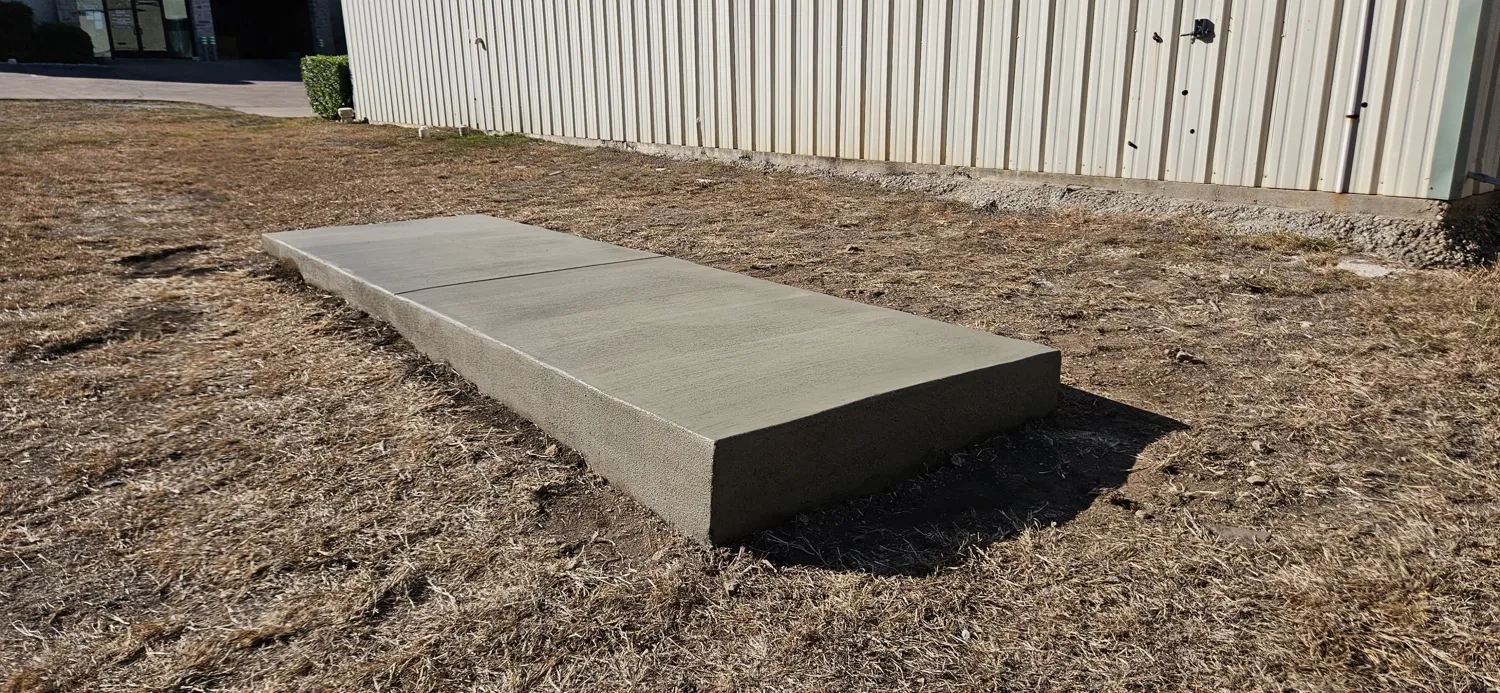
Pad and slab work in North Texas generally starts around $7 to $13 per square foot, with turndown edges, extra thickness, approach pours, and tough access adding from there. A shop floor and an AC pad live at opposite ends of that math, so we price after standing on the site, not from a phone sketch.
Most RV pads pour at 5 to 6 inches with reinforcement, sized longer and wider than the rig so jacks, steps, and cords land on concrete instead of dirt. The approach matters as much as the pad; a heavy coach needs a clean, graded path on and off.
Yes, and it is core work for us on Keller's larger lots. We build to the manufacturer's foundation drawings: turndown footings, anchor bolts or brackets on their layout, and any plumbing or electrical rough-ins set before the pour, coordinated with your erector so the kit lands without surprises.
Depends on your street and what sits on the slab. Plenty of older Keller acreage has no design review, while the newer subdivisions usually do, and the city has its own permitting rules once a structure is involved. We help you sort those questions before the work starts rather than after.
More than it usually gets: a level, reinforced pad sized past the equipment footprint, real base prep even at small dimensions, and isolation from any adjoining patio so the two slabs can move without fighting. Small pours fail from skipped prep, not small size.
Yes. The new pour gets doweled into the old so the sections move together, elevations get matched at the seam, and we are honest that fresh concrete cures lighter and blends toward the existing color over seasons, not overnight.
You'll hear back from a real person, usually the same day. No call center, no runaround, no chasing us down.
Booking up fast this season. Or call (817) 369-3206