How much does a concrete driveway cost in Keller?
Standard driveway work in North Texas generally opens around $8 to $14 per square foot, with exposed-aggregate and decorative finishes above that, plus demolition where an old drive comes out. On Keller's long runs and motor courts, total square footage is the dominant driver, followed by depth, finish, and access. We commit to a price after seeing the site, never off a phone call.
Can you add a circular drive or widen to a motor court?
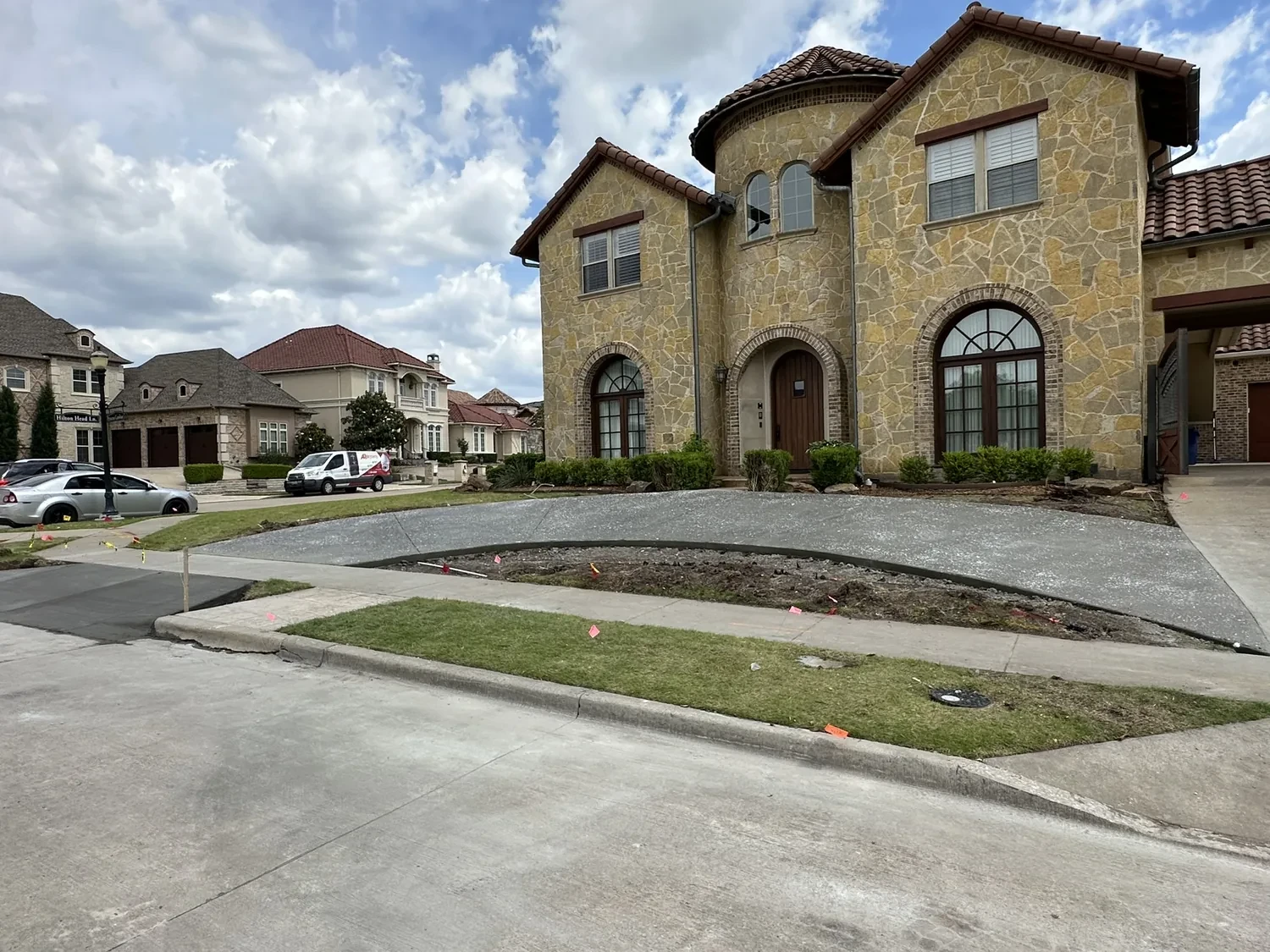
Yes, and it is steady work here. New concrete gets doweled into the existing drive so the pieces move together, elevations get matched at the seam, and the joint layout is drawn so the addition reads as intentional. Expect the new pour to cure lighter and blend toward the old over a few seasons; anyone who promises an instant match is overselling.
Can you replace only the failed sections of a long drive?
Sometimes, and we will tell you honestly which case you have. When the base under a section gave out, panel-by-panel replacement on a rebuilt base is money well spent. When the whole run was poured thin or the soil movement is general, patching becomes a subscription, and a full rebuild is the cheaper path over ten years.
How do you work around an electric gate?
Carefully and in coordination. The pour isolates the gate posts so slab movement does not rack the hardware, we protect or re-loop the detection wiring with your gate contractor, and staging keeps the gate usable for as much of the project as the layout allows.
How long before we can park on the new driveway?
Foot traffic comes first, passenger cars later, and heavy vehicles last, because concrete keeps gaining strength well after it looks done. Exact dates depend on the weather that week, and you get them in writing on pour day rather than as a guess.
What keeps a long driveway from cracking on this soil?
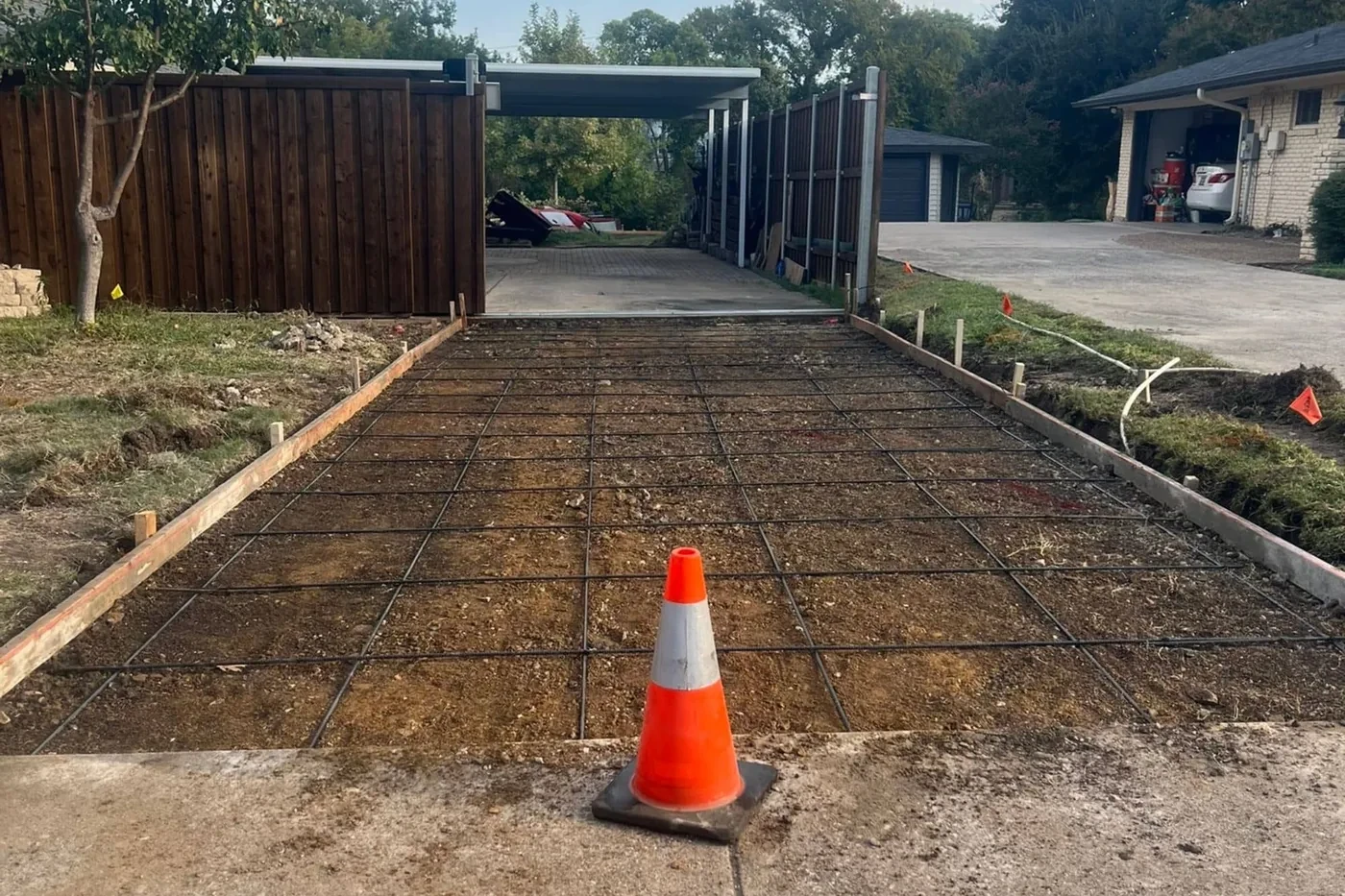
Base compacted the full run, steel through the slab, joints on a drawn layout, and water managed off the edges, including sprinkler heads and young trees kept back from the concrete. This ground moves through wet winters and dry Augusts; we cannot stop that, so we build so the movement lands in the joints we cut.